

3 years' lessons as a freelance data analyst on Upwork: On clients, mental health, and AI
sometimes, reality is a teacher.

May 2023.
That’s when I decided to start freelancing on Upwork. I had applied for over 200 data analyst roles and was rejected by all of them. After watching an hour-long video (or more) from a SQL developer named Josh, I signed up on Upwork.
3 years later, and it’s still one of my saddest decisions.
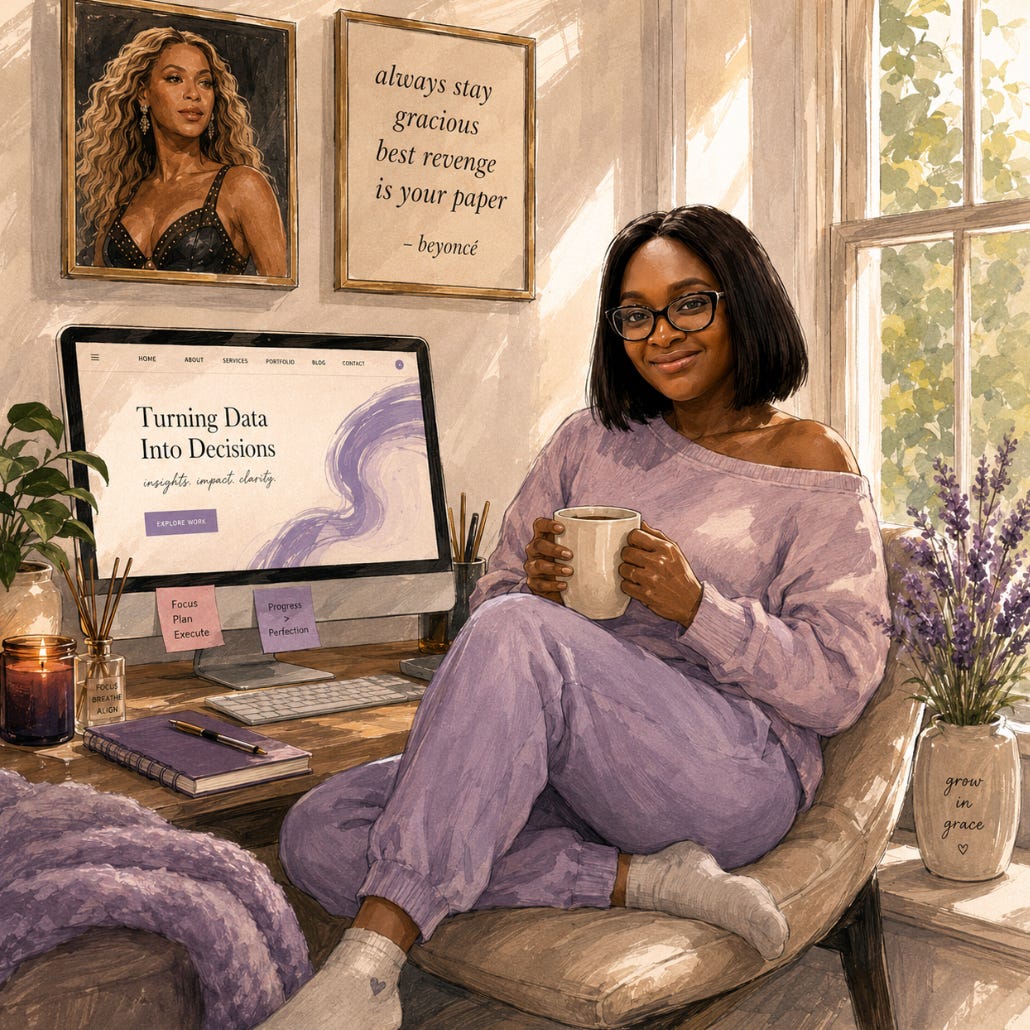
I don’t regret it because freelancing allowed me to set up a structure as a data analyst looking for opportunities, and prove myself and my skills even when the real world said, “We don’t want you.”
When I signed up on Upwork, it didn’t take long to realize my limitations.
1. I wasn’t ready to work this hard … at my age.
2. I was competing with a mammoth crowd to be seen and “chosen.”
And before i could even get any contract, terror replaced my excitement. I was not ready for this. And maybe, if you know my story, you will get what I mean.
The platform promises/d the freedom to choose clients at my rates; it didn’t mention that I’d have to “beg” and compete with thousands of possibly more innovative, experienced, and, most especially, cheaper analysts, nor that I’d need to spend my own money to earn more.
3 years in and $8k+, I think I’m qualified to share some of my lessons, successes, screw-ups, and takeaways.

1. Embracing the learning curve
Data analysis and data science are broad fields. You have enough tools for a class of 50 in a university, and they would all arrive at the exact same insights. Hectic.
SQL, SPSS, Python, Excel, Stata, Tableau, Power BI, Alteryx, Snowflake, Qlik, R, Streamlit, and machine learning. A whole smorgasbord of options.
I would like to know all these tools and how to use them, but I also want time to work. So, I had to streamline my skills and expertise. You can be exceptional at SQL, and the trend is Power BI, or something else.
But on Upwork, most clients want specialization, not someone who knows every tool but can’t specialize in any. So I got into the habit of dedicating 30 minutes a day to skill-building (maybe my head permits this, lol).
30 minutes of tutorials on a new library, AI, or practicing EDA with a personal or public dataset. It keeps me up to date and confident enough to pitch for gigs I thought were beyond my reach.
Occasionally, I fine-tune my profile to “what I think” clients prefer and hope for the best. I think hoping for the best is what works for freelancers.
At first, I used to feel overwhelmed, “Do I know enough to do this?” It turns out nobody knows everything. Good freelancers simply learn on the job.
2. Overcommitment
Oh, how I wanted to please. I took any job that came my way, even if it was unrelated to data analysis. If you check my profile, I once did a review for a candle company, and I nearly opened a new bank account just for a gig.
My first job on Upwork was to write a review on an e-commerce site. You may be familiar with this. I’d see new listings and bid immediately without considering if they were the right fit. Message every client, greet them like they were my parents, and proceed with a long proposal of how I could be of service.
Soon, I was juggling small projects that did not reflect my skills, getting anxious, and wishing for it to end so I could get paid $10.
3 years in, I’m still about the money, but not just on Upwork, and thanks to this, I have slowed down. Now, I set realistic expectations. I prioritize quality over quantity and create time to prepare for the next project.
freelancing, especially on Upwork, is tough...
… and sometimes, you may fall into overcommitment, but think of the results of fewer commitments: happier recurring clients, better reviews, and sanity. And reviews can make or mar you as a freelancer.
3. Managing mental health on the freelance rollercoaster
Freelancing is emotionally tricky. It gives you the feeling that you are busy, then when that pay hits, you start wondering:
“Is this what I did all that for?” I’ve asked myself this question way too often.
One month, you can have 2–3 long-term projects and a steady income. Then, it’s radio silence. This uncertainty triggered stress and self-doubt in me.
And to make it worse, I faced a loss I haven’t recovered from, and left the platform for a while. When I returned in 2024, I had to develop some habits to help me open Upwork again:
Structured work hours: I started treating freelancing as a 9–5. Starting at 9 and ending at 3. You might think this is silly, the money I’m getting is silly too, but I’m consistent with time, and no midnight panic sessions if possible.
Breaks: Thanks to my supportive husband, I got one of those sit-stand tables, so every hour or so, I’d step away from the screen, stretch, grab water, do some jumping jacks, play candy crush, or read. This gave me some micro-breaks from always submitting proposals.
Celebrating small wins a.k.a smile files: Did I finally master that tricky data-cleaning step? Land a new or recurring client? I mark these successes. My favorite client is a recurring one who pays $50 for an Excel analysis and dashboard. I don’t wish for more (though I’d appreciate it); I just want them to keep returning because it means they trust my work.
These tricks have helped me compartmentalize my feelings, know when to check in mentally, and help myself if I have to.
Structure, breaks, celebrating small wins, and love.
4. Creating a positive work environment
Not everyone can afford a decked-out home office, but small changes help.
A decent chair, a monitor, good lighting, and a pleasant scent can boost productivity and mood. I keep my workspace minimal and clean. No empty cups, a mini bin for unwanted papers, flowers, diffuser, and a lamp.
Sometimes I listen to white noise or my favorite artist, Beyoncé.
When I need to zone in, I join a digital workspace with other freelancers. Adding plants or flowers to my desk boosts my positivity and keeps things cozy (😉).
5. Navigating difficult clients and learning to say no
On Upwork, you’ll meet different types of people.
A client reached out for tutorials on Excel dashboards, and throughout our call, they wouldn’t put their phone down. I was talking to myself.
Some clients know exactly what they need. Others? not so much. You have to make recommendations and guide them in using their results for data-driven solutions.
Some pay promptly, others just vanish.
I learned to communicate clearly and frequently. My proposal may be short, but I always outline my scope, timeline, and deliverables in writing. And I ask questions if something’s unclear. Some clients prefer not to use Zoom, and I respect that, so I document everything. If I think I might miss a deadline, I inform them.
Build trust through transparency, and it’s okay to walk away if a client is toxic.
In the latter part of 2024, I started saying “NO”. My husband sometimes jokes that no is my favorite word. I will “politely” suggest that there are other freelancers better suited for some goals. I declined projects that didn’t respect my time or efforts.
Protecting your mental health and professional reputation is important, even though a paycheck is important too.
I must add that I have also stopped aggressively chasing clients on Upwork, so if that’s your goal, ignore me.
6. Upscaling and diversifying:
An old saying says: don’t put all your eggs in one basket…
Freelancing is good, but not so easy. Relying on one platform is risky, and on Upwork, if you’re a beginner like me, you will have very slowww months. Sometimes, it’ll feel like you’re alone on the platform.
For 2 months, I submitted over 20 proposals, and not even one was VIEWED.
So, I started keeping an eye out for opportunities, whether it’s on LinkedIn, direct referrals, templates I can sell, writing, or short-term consulting gigs.
I also learn new skills. AI tools have changed the game for data analysts, some tasks are easier, and others, obsolete.
Staying on top of emerging technologies, prompt engineering for AI models, advanced visualization tools, automations or domain-specific analytics, I make sure I’m not left behind.
No! what you’re not going to catch, — is me slipping.
7. Staying relevant in an AI era
AI is here to stay, and as AI and machine learning tools become more accessible, more people can do “data analysis” at some level.
I wrote about this before; everybody is an analyst.
Data Analytics: Your gut feeling is wrong, and data is right!
We are all analyzing data with our eyes or SQL and Python. So, the barrier is low. More people can clean data, analyze it, build dashboards, and automate reports. :)
I had to differentiate myself. I always highlight my ability to interpret results and communicate insights to stakeholders, a skill that an AI tool can’t replicate as effectively.
My $50 client allows me to use Excel formulas, derive insights from their data, and communicate how these formulas were helpful.
I also learned automation with n8n and Python, and I have become a data storyteller by understanding clients’ pain points, which helps me stay relevant.
8. Money management
Earnings on Upwork and as a freelancer fluctuate, so I’ve learned to manage them. I used to leave $40-$60 in my Upwork account to cover the $20 monthly freelancer fee, but after some personal financial analysis (😉), I canceled it. I will write about this in a shorter post.
Upwork takes 15% of your earnings, and then there are taxes. I don’t save much of my earnings on Upwork. Do the maths, if i’ve made $9k in 3 years, how much is the hourly pay using my 20 hr work week? which is now $45.
This kind of evens out the feast-or-famine cycle. When times are good, I invest in my savings. When they are not, I have something to rely on.
I pay myself a “salary” in the form of a bouquet and refuse to fall victim to the consumerist impulse to continually improve my setup. They’re lovely, but again, scroll up to see my limitations.
When times are lean, well, they are lean. Lesson 3 reminds me to chase money another day and break free from the unending cycle of wondering if it’s worth it.
Freelancing as a data analyst on Upwork is not a walk in the park. Anyone who tells you otherwise is lying or earning from other sources.
Only 1% of freelancers have made millions of dollars from Upwork.
That’s the reality.
While I hope every freelancer reaches that mark, this takes YEARS of work, consistency, and sacrifice.
Skills like communication, time management, adaptability, and self-care can make a difference.
I don’t think freelancing gets easier. As you make more money, you tend to have more work. These lessons are just what helped me keep going. If you’re starting out, balance, growth, and self-care are keys.
Be data-informed, data-driven, but not data-obsessed
🔗 Biz and whimsy: https://linktr.ee/amyusifoh
🔗 Free design toolkit: dashboard design toolkit
#Upwork #Freelancing #Dataanalysis
Data Scientist⬩ Spreadsheet advocate ⬩ Freelancer ⬩
Enjoyed this? I’m building some data tools using an AI-orchestrated workflow.
Subscribe for the drafts, failures, design choices, and finished product.
Up next on data according to me: Intro to Git vs GitHub…
Do you still play candy crush? 😄 I used to play it like crazy, I played more than 1000 lvls before I could finally quit 😅🙈